

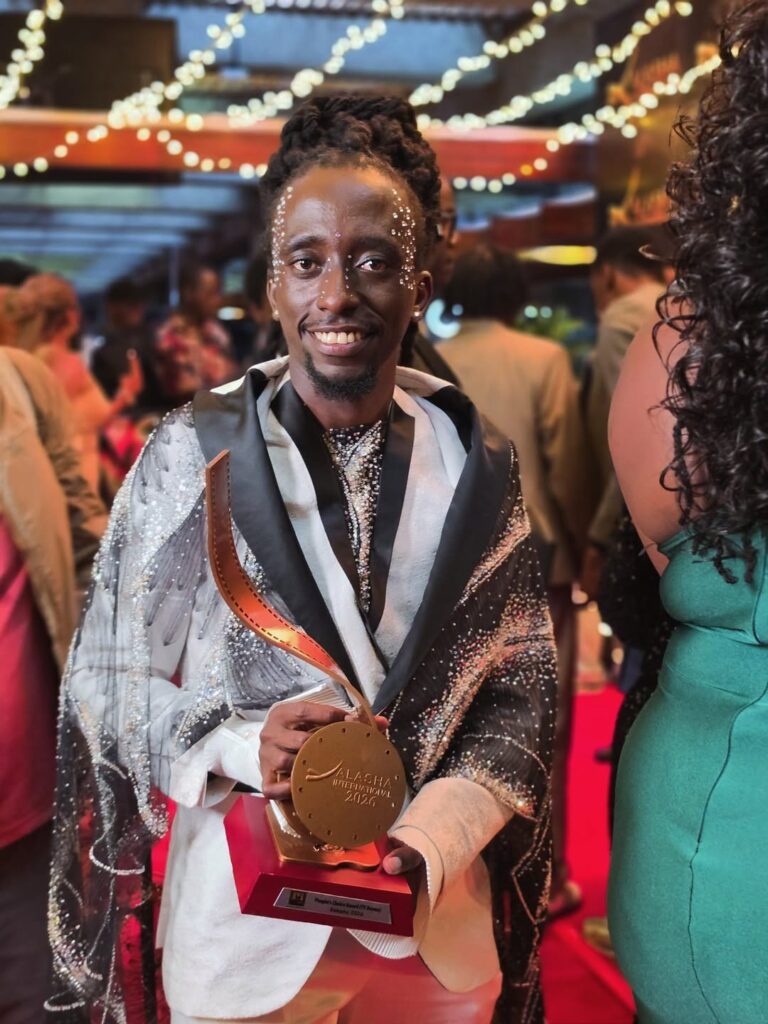
When MTV Shuga Mashariki returned for its second season, it came back with a mandate: bolder storytelling, deeper conversations, and a higher production standard than ever before. The franchise — originally commissioned in Kenya in 2009, the series that first put Lupita Nyong’o on screen — was back home. And with it came the responsibility of honouring a legacy while pushing the craft forward.
MMF Studio Africa was part of that push. First, with Louiza, our former lead editor, later handing over. As the editor of Episode 2, Season 2, Monicah Mugo stepped into the full spectrum of the post-production process — and what emerged was a demonstration of exactly what it means to be a complete post professional in today’s African film industry.
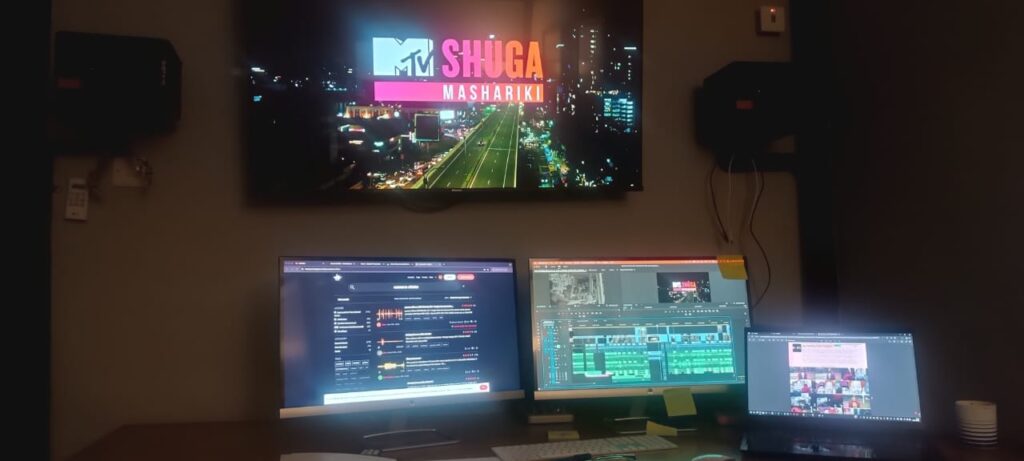
Interview Link: https://youtu.be/FuJundn9s-g?si=mGb85YKL4lygFbkI
More Than an Edit
The role of an offline editor on a production like Shuga Mashariki Season 2 is deceptively expansive. On paper, the job is to cut the episode — to find the rhythm of scenes, to shape performance, to build tension and release within a story that needs to land emotionally for a young Kenyan audience while meeting the delivery standards of a Paramount-commissioned series airing on Citizen TV, BET, and globally on YouTube.
In practice, it is far more than that.

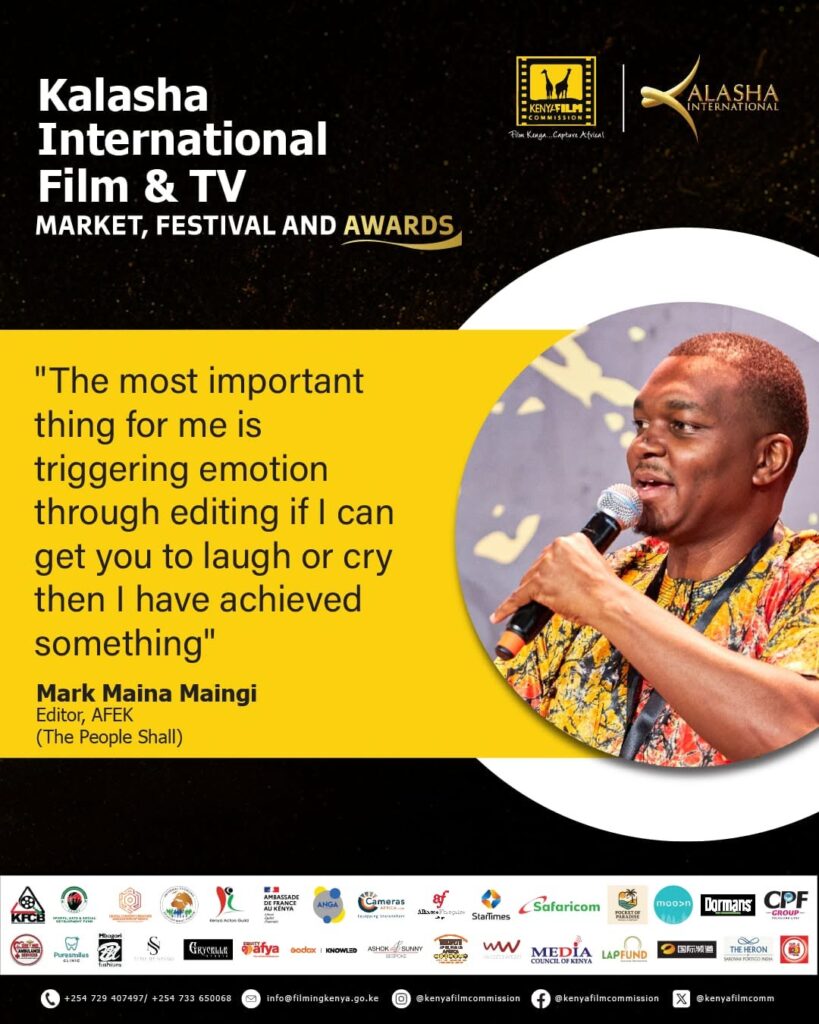
Mark Main edited both Seasons 1 & 2
For Episode 2, the editing role extended into sound design and music supervision — two disciplines that most offline workflows treat as downstream concerns, something for the post house to handle after picture lock. At MMF Studio Africa, having been commissioned by APO, we operate differently. The philosophy is that a close-to-complete draft — one where picture, sound, and music speak together from the first assembly — produces sharper creative decisions, faster feedback cycles, and a final product that feels intentional at every level. That is what we delivered on Shuga Mashariki Season 2, Episode 2.
Navigating the Music
One of the most demanding creative elements of this episode was the music. MTV Shuga Mashariki Season 2 introduced 25Flow, an original soundtrack produced by SoFresh and featuring Kenyan artists — music woven directly into the series to anchor its emotional and cultural tone. Alongside this original score, the production had access to a vast licensed catalogue that needed to be navigated with precision: the right track at the right moment with tight deadlines, serving the story rather than decorating it.
This is where post-knowledge earns its weight. Music supervision is not about finding a song that sounds good over a scene. It is about understanding the emotional architecture of a scene well enough to know what the music must do — whether to underscore, to contrast, to foreshadow, or to simply get out of the way and let the performance breathe. For a youth drama like Shuga, where the audience is digitally literate and culturally sharp, that distinction matters enormously.
The locally composed tracks added another layer of responsibility. These were not library sounds — they were original creative work, and integrating them required an understanding of the musical intent, the cultural context, and the way each track sat against dialogue, ambient sound, and the overall sonic world of the episode.
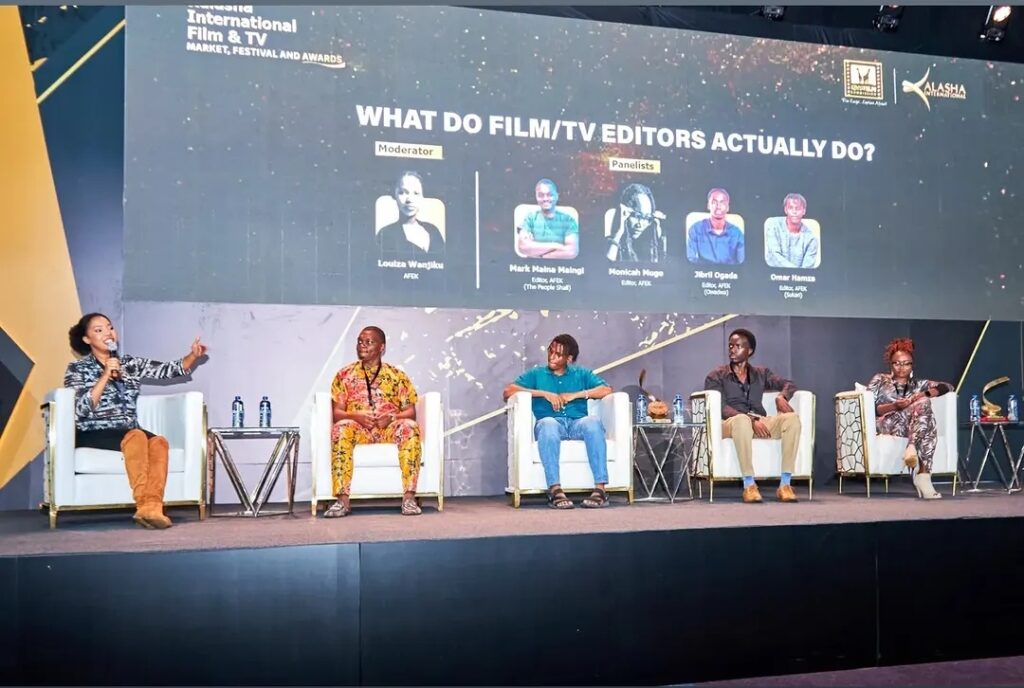
Shuga Editors: Louiza – far left, Mark – second Left, Monicah – far right at Kalasha’s first post – Production’s Panel for all nominated Films and TV series
Interview Link: https://youtu.be/FuJundn9s-g?si=mGb85YKL4lygFbkI
The Innovation Edge
The conventional model for offline editing separates the picture from sound and music. The editor cuts the picture. The sound designer comes in later. The music supervisor works from a locked cut. Each stage adds time, adds cost, and — crucially — creates gaps where creative intention can drift.
MMF Studio Africa’s edge is in collapsing that model if the timeline deadline is tight. An offline editor who is also a sound designer and music supervisor is not simply more efficient — they are a different kind of creative decision-maker. Every picture cut is made with an awareness of what it will demand sonically. Every sound decision is made with the full visual architecture in mind. The result is a draft that does not just show what the scene looks like, but what the scene feels like — which is ultimately the only question that matters.
On a Paramount-commissioned series with international distribution and a young, discerning audience, that level of craft integration is not a luxury. It is the standard.

Award Recognition
The industry agreed.
MTV Shuga Mashariki Season 2 was nominated at the Africa Magic Viewers’ Choice Awards (AMVCA), one of the continent’s most prestigious screen industry honours, taking home the award for Best Scripted Series. The recognition affirmed what the production team had committed to from the outset: that youth-led, socially purposeful storytelling, made entirely in Kenya, can compete and win at the highest level of African television.
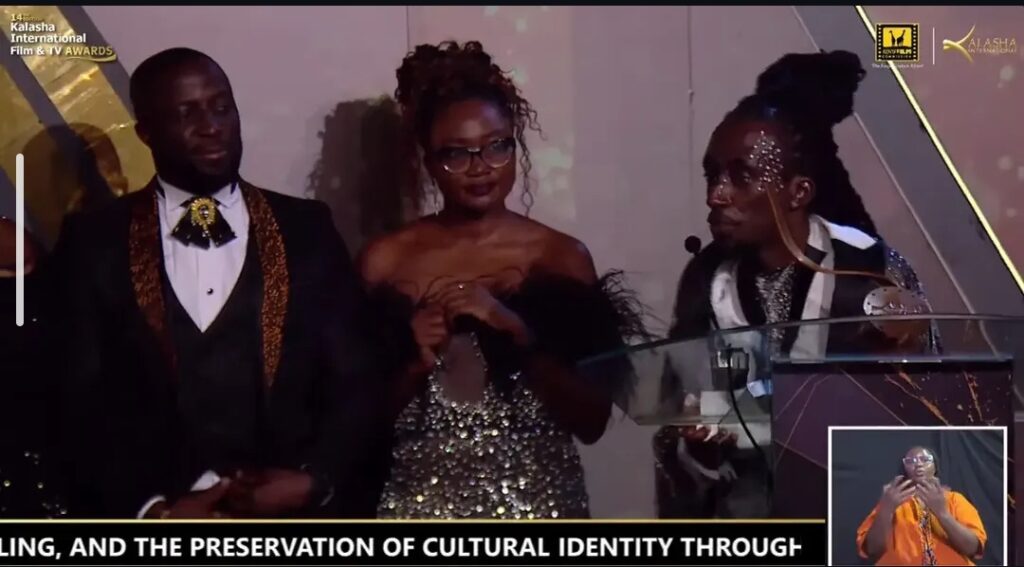
Closer to home, the series also claimed the People’s Choice Award at the Kalasha International Film and Television Festival — Kenya’s premier screen industry awards and one of the most important platforms for recognising East African content. The People’s Choice Award carries a particular weight: it is not a jury decision. It is the audience speaking. And the Kenyan audience chose Shuga Mashariki.
Two awards. Two different measures of the same truth: that this series is connected.
What This Means for East African Post Production
MTV Shuga Mashariki Season 2 is a landmark production for the Kenyan film industry. It is a proof of concept — that Kenya can produce youth-led, socially purposeful drama to international broadcast standards, with a fully Kenyan creative team at every level of the process.
MMF Studio Africa’s contribution to Episode 2 is a reflection of what post-production in East Africa is becoming: not a service that follows production, but a creative force that shapes storytelling from the inside out. A real collaboration of creative editors from AFEK, the Association of Film Editors of Kenya.
We are proud to have been part of this season. Special gratitude to the African Post Office for this opportunity. And we are more convinced than ever that the future of African screen content will be shaped by post professionals who understand that their craft is not technical support — it is authorship.
MMF Studio Africa Ltd is a Nairobi-based production and post-production company specialising in film, television, documentary, Music, adverts, and branded content. To discuss your next project, get in touch.